Kitten Milk Replacer in India 2026: Brands & Price
Beaphar Lactol (~₹997) is the easiest kitten milk replacer to buy in India; Pet-Ag KMR is the imported standard. Brands, prices and how to feed an orphan.
Pet Care Tips Editorial7 min read
If you've just taken in a tiny kitten with no mother around, the single thing that matters in the first hour is this: do not give it cow's milk. A kitten's gut can't handle it, and it causes the diarrhoea that kills orphaned kittens faster than hunger does. What it needs is a proper kitten milk replacer — a powdered formula made to match cat's milk. In India the easiest one to buy is Beaphar Lactol (around ₹997 for 200g), with the imported Pet-Ag KMR as the gold standard. Here's which to buy, what it costs, and exactly how to mix and feed it.
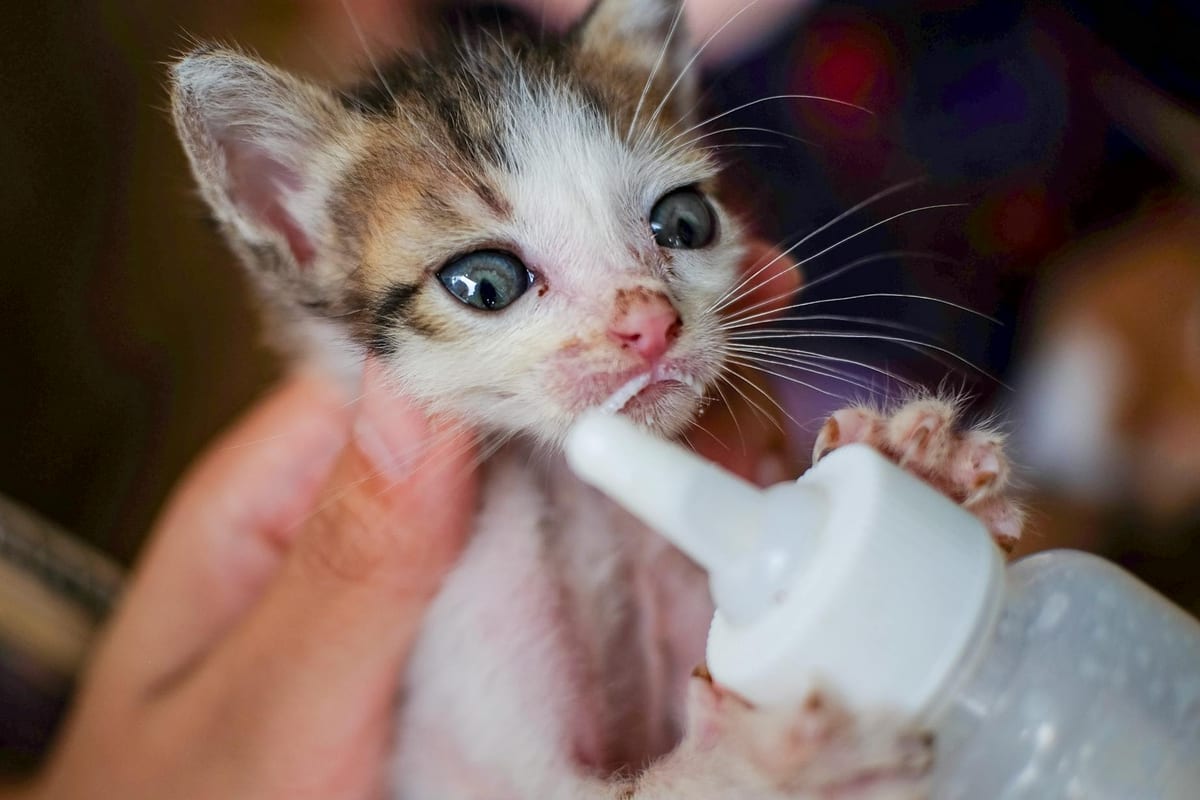
Why a kitten needs milk replacer (and never cow's milk)
Cat's milk is far richer in protein and fat than cow's or buffalo milk, and much lower in lactose. Pour dairy-counter milk into a three-week-old kitten and you get the opposite of what it needs: too little nourishment, too much lactose, and a bout of diarrhoea that dehydrates a body too small to spare the fluid. Diluted milk, sugar water and Lactogen baby formula are the usual home guesses, and they all fall short for the same reason — they aren't built for a cat.
A kitten milk replacer (KMR) fixes the ratios. It's a powder you reconstitute with warm water, formulated to roughly match queen's milk on protein, fat and calcium, with added taurine — the amino acid cats can't make themselves. For any kitten under four weeks old without a nursing mother, this is the only safe staple food.
Get a vet's eyes on the kitten too. A milk replacer feeds a healthy orphan, but a cold, limp, or non-suckling kitten is a medical emergency. Warm it gently against your body first — a chilled kitten cannot digest milk — and call a vet the same day. Nothing below replaces an in-person exam.
Best kitten milk replacer brands in India
Four brands actually turn up in Indian stock with any reliability. Here's how they compare.
| Brand | Pack | Typical price | Notes |
| Beaphar Lactol | 200g / 250g / 400g | ~₹997–2,000 | The India default. Widely in stock on Amazon, Flipkart, Supertails. With DHA, vitamins, minerals. |
| Pet-Ag KMR | ~170g–340g | ~₹2,600+ | The imported gold standard vets reach for. Pricier and stock comes and goes. |
| Pet-Ag PetLac | ~300g | ~₹2,600 | Pet-Ag's value line; same maker as KMR. |
| Nutrience / Hartz | ~340g | ~₹2,700 | Imported alternatives that surface when the others are out of stock. |
Beaphar Lactol — the one to buy first
For most people in India this is the practical answer, because it's the one you can actually get delivered tomorrow. It's a complete kitten formula with DHA for brain development and the vitamin and mineral profile a growing kitten needs. The 200g pack does an orphaned litter for a week or two of early feeds. Check Beaphar Lactol on Amazon.
Pet-Ag KMR — if you can find it
KMR (Kitten Milk Replacer) is the original, and the one rescue networks and many vets prefer. It mixes smoothly and sits well on delicate stomachs. The catch is price and availability — it's imported, so it costs more than double the Beaphar and isn't always in stock. If you're raising a fragile or very young litter and can get it, it's worth the premium. Check Pet-Ag KMR on Amazon.
You'll also need a feeding kit
Powder alone won't feed a kitten. Get a kitten nursing bottle with the smallest nipple, or a 1ml syringe for a very tiny newborn, plus a small whisk or fork to mix out the lumps. Kitten feeding bottles on Amazon are cheap and worth keeping a spare nipple for.
How much does kitten milk replacer cost in India?
Budget roughly ₹1,000–2,700 per pack depending on brand and size. Beaphar Lactol sits at the affordable end (₹997 for 200g, around ₹2,000 for 400g); the imported Pet-Ag, Hartz and Nutrience options run ₹2,600–2,700. One 200–400g pack covers the bottle-feeding weeks for a small litter, because intake is measured in millilitres a day, not cupfuls. Set against the vet bill of a kitten that got cow's milk and crashed with dehydration, it's the cheapest insurance you'll buy.
How to mix and feed kitten milk replacer
Always follow the ratio printed on your tin — brands differ slightly. As a general guide, a typical mix is about 1 part powder to 2 parts warm (not hot) water, whisked smooth so there are no lumps to clog the nipple.
- Mix fresh and warm it. Reconstitute, then warm to body temperature — about 38°C, the same warmth as your wrist. Cold formula chills the kitten; hot formula scalds. Never microwave the bottle (it heats unevenly); stand it in warm water instead.
- Warm the kitten first. A kitten under 35°C can't digest. If it feels cool, warm it against your skin or with a wrapped warm bottle before the first feed.
- Feed belly-down. Hold the kitten on its tummy, head level — never on its back like a human baby. That stops formula going into the lungs.
- Let it suckle, don't squeeze. Tip the bottle so the nipple fills, and let the kitten draw at its own pace. Force-feeding causes aspiration.
- Burp and toilet. After each feed, rub a warm damp cotton ball over the kitten's genitals to trigger it to pee and poo — under three weeks they can't go on their own.
- Refrigerate leftovers max 24 hours. Discard any made-up formula older than a day, and never re-warm the same bottle twice.
How often and how much to feed
The younger the kitten, the more often it eats. Weigh it on a kitchen scale daily — steady weight gain (roughly 10–15g a day) is the single best sign you're getting it right.
| Age | Weight | Feeds per day | Roughly |
| 0–1 week | ~50–150g | Every 2–3 hours, incl. overnight | 2–6 ml a feed |
| 1–2 weeks | ~150–250g | Every 3–4 hours | 5–10 ml a feed |
| 2–4 weeks | ~250–400g | Every 4–6 hours | 10–14 ml a feed |
| 4+ weeks | 400g+ | Start weaning | Mix into gruel |
Can't get milk replacer tonight? The emergency stop-gap
Pet shops shut and deliveries take a day, and a newborn can't wait. As a one-night bridge only, you can mix an emergency formula from kitchen ingredients — boiled-and-cooled water, egg yolk and a little plain curd or evaporated milk in careful proportions. We've written the full method, with the exact quantities and the safety caveats, in our guide to homemade kitten milk replacer. Treat it strictly as a stopgap: switch to a proper commercial replacer, and get the kitten to a vet, as soon as you can. A homemade mix isn't nutritionally complete for more than a day or two.
When to stop milk replacer and start weaning
Around four weeks, kittens start to be ready for solids. Stir a little replacer into wet kitten food to make a soupy gruel and offer it in a shallow saucer; most will lap and mush at it before they'll bite kibble. Over the next two to three weeks thicken the gruel and cut back the bottle feeds. By six to eight weeks the kitten should be eating proper kitten food and off the replacer entirely. When you're choosing that first solid food, our notes on the best dry cat food in India and, for the breed-curious, the Persian cat price guide are good next reads.
Where to buy kitten milk replacer in India
Online is the most reliable, because physical pet shops outside the metros rarely stock it. Amazon India and Flipkart carry Beaphar Lactol and the imported Pet-Ag range; Supertails, Headsupfortails and Petsutra are the pet-specialist sites worth checking when the marketplaces show out of stock. In Bangalore, Mumbai, Delhi and other big cities a well-stocked vet clinic or a large pet superstore will usually have Beaphar on the shelf. Order a spare pack before you run out — the worst time to discover it's sold out is at 2am with a hungry litter.
Keep one small pack in the house if you live anywhere kittens get dumped near you. It's a few hundred rupees that turns a midnight emergency into a manageable one.
Frequently asked questions
- What can I feed a kitten if I don't have kitten milk replacer?
- Not cow's milk — it causes diarrhoea and dehydration. As a one-night emergency only, a careful homemade mix of boiled-and-cooled water, egg yolk and a little plain curd or evaporated milk can bridge the gap, but switch to a proper commercial replacer and see a vet as soon as you can.
- What is the best kitten milk replacer available in India?
- Beaphar Lactol (around ₹997 for 200g) is the most reliably in-stock and the practical first buy. Pet-Ag KMR is the imported gold standard that many vets and rescuers prefer, but it costs more than double and stock comes and goes.
- How much does kitten milk replacer cost in India?
- Roughly ₹1,000–2,700 per pack. Beaphar Lactol is the affordable end (~₹997 for 200g, ~₹2,000 for 400g); imported Pet-Ag, Hartz and Nutrience formulas run ₹2,600–2,700. One pack covers the bottle-feeding weeks for a small litter.
- Can I give a kitten Lactogen or cow's milk?
- No. Cow's, buffalo and goat milk are too high in lactose and too low in the protein and fat a kitten needs, and human baby formula like Lactogen isn't balanced for a cat. Both commonly cause diarrhoea. Use a kitten-specific milk replacer instead.
- How often should I feed a newborn kitten?
- A kitten under one week needs feeding every 2–3 hours, day and night; at 1–2 weeks every 3–4 hours; at 2–4 weeks every 4–6 hours. Weigh it daily — steady gain of about 10–15g a day is the best sign it's feeding well.
- When do kittens stop needing milk replacer?
- Weaning starts around four weeks by mixing replacer into wet food as a gruel. By six to eight weeks most kittens are eating solid kitten food and off the replacer completely.
More on Cats

What Can Cats Eat on Thanksgiving?
Thanksgiving is a time for family, gratitude, and of course, delicious food. As you gather around the table to enjoy a festive feast, it’s natural to want to…
· 2 min read
Can Cats Eat Turkey Necks?
As a cat owner, you may be wondering if it is safe to feed your feline friend turkey necks. Turkey necks are a popular choice for many pet owners due to their…
· 3 min read
Can Cats Eat Bananas? Understanding the Feline Diet
As a cat owner, it’s natural to wonder about what foods are safe and suitable for your feline friend. While cats are obligate carnivores, meaning their bodies…
· 3 min read